
Understanding Adoption
as a Lifelong Experience.
Not Just a Legal Event.
"Adoption begins with a loss that is disenfranchised. We walk a road of grief. It is the road itself." Adoption-literate mental health education, clinical insight, and systems-level advocacy for the entire Adoption Diaspora. Scottsdale, Arizona & Nationwide.
"This is not a niche issue. Adoption and foster care are social determinants of health — and our systems are not treating them that way."
Dr. Maria Cronyn, NMD DABHM
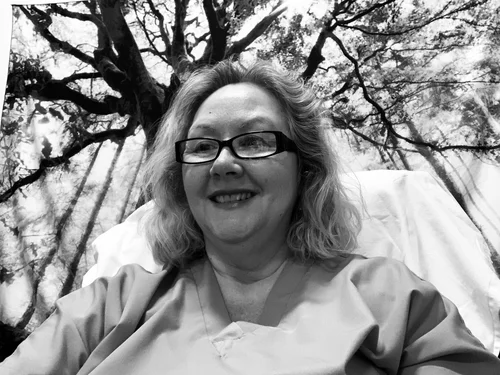
My name is Dr. Maria Cronyn. I am a naturopathic physician, a Diplomat of the American Board of Homeopathic Medicine, a military veteran, and, most centrally to this work, an adoptee.
I have spent more than 25 years in integrative mental health. I have sat with clients who could not name why they felt the way they felt. I have watched people cycle through therapist after therapist, each one well-meaning and none of them equipped to understand what early separation actually does to a developing nervous system, an emerging identity, a sense of whether or not you deserve to exist fully in the world.
I also know that experience from the inside.
I founded Adoption Evolution because the organization I needed, one built on lived experience, rigorous clinical understanding, and a commitment to honoring the full complexity of this, did not exist. So I built it.
"As an adoptee and clinician, I have watched early separation shape lives for decades, quietly, invisibly, and profoundly. Adoption Evolution translates that reality into language that finally makes sense of the experience."Dr. Maria Cronyn, NMD DABHM | Founder, Adoption Evolution
Education, Advocacy, and the Language This Community Has Always Deserved
Adoption Evolution advances adoption-literate mental health by providing education, clinical insight, and systems-level advocacy that honors the full, complex truth of the adoption and early separation experience, for adoptees, foster alumni, biological parents, and the professionals who serve them.
Adoption and foster care are social determinants of health. They shape neurological development, stress response, identity formation, lifelong physical health outcomes, and generational wellbeing. Yet most clinical systems still treat them as background information rather than as foundational health context. That is the gap this organization exists to close.
Too many adoptees and foster alumni have been told to focus on the positive, to be grateful, to move on, before they have ever been given accurate language for what they actually experienced. Too many biological parents have been handed silence instead of support. Too many clinicians have encountered these clients without the frameworks to understand adoption-specific and foster care-specific complex trauma.
We believe healing begins when people are no longer required to hide, simplify, or explain away their truth. We believe systems change when the professionals within them are equipped with better knowledge. We work at both levels, individual and institutional, simultaneously.
What We Are Missing
Families seeking mental health care for children who are adopted or have experienced foster care often cycle through 8 to 10 different providers before finding appropriate support. Many never get that far. Most disengage after just two or three attempts.
At the same time, research and clinical experience show that over 90% of children impacted by foster care or adoption meet criteria for post-traumatic stress, yet fewer than 10% are actually diagnosed.
This gap has serious consequences. When trauma is not properly identified, children are frequently given multiple diagnoses: ADHD, mood disorders, behavioral disorders, while the underlying issue remains unaddressed. This leads to patterns of overdiagnosis and overmedication, particularly in a population that is often highly sensitive to pharmaceutical intervention.
Adoption-competent care takes a different approach. When trauma is present, it must be recognized and treated as the central issue. The focus should remain on stabilizing the nervous system, addressing complex trauma, and supporting identity and attachment, rather than layering additional diagnoses that obscure the root cause.
Without this shift, families continue to cycle through systems that do not fully see or understand what these children are carrying.
I use the term the Adoption Diaspora to name what I am building toward. A diaspora is a people dispersed from a shared origin, scattered, often across circumstances they did not choose, carrying the memory of a connection that was interrupted.
That is exactly what early separation creates across every part of the adoption and foster care experience. Adoptees, foster alumni, biological parents, adoptive and foster families, all shaped by the same original rupture, often carrying it in isolation, often without ever finding one another.
Adoption Evolution exists to gather that diaspora. To create the community, the language, and the support that allows people to stop carrying this alone.
The Adoption Diaspora is a term coined by Dr. Cronyn to describe the community of everyone whose life has been shaped by adoption or early separation trauma. It is the foundational vision of Adoption Evolution, that all of these people belong in the same space, supported by the same commitment to honesty, and no longer required to carry their experience in isolation.
Everyone in the Adoption Diaspora
Adoption and foster care touch more lives than most people realize, and their effects are not background details. They are health determinants. Adoption Evolution was built to serve everyone who carries the weight of that separation, on every side of it.
Adoptees & Foster Alumni
If you were adopted or spent time in foster care, you may have spent years searching for language that actually fits your experience: the grief that doesn't have a name, the attachment patterns you couldn't explain, the identity questions that never got satisfying answers. What you are experiencing is not personality; it is the lasting signature of early separation trauma, a complex trauma that shapes the nervous system from the earliest stages of development. You are not too sensitive. You are not ungrateful. You are responding to something real.
Adoptive & Foster Parents
Loving your child deeply is not the same as understanding what they carry. Adoption-literate parenting means learning how early separation shapes the nervous system, attachment, and identity, and responding in ways that are grounded in that understanding. We provide education and clinical insight that equips you to be the parent your child actually needs.
Parents Preparing to Adopt
The time before a child comes home is one of the most important, and most underused, windows for education. Understanding what early separation does to a developing nervous system, what adaptive parenting looks like in practice, and how to build a home environment that supports healing from day one is not just helpful. It is foundational.
Mental Health & Medical Professionals
Adoption and foster care are social determinants of health, yet adoption literacy remains a significant gap in most graduate clinical training. If you are a therapist, psychologist, physician, pediatrician, social worker, or educator, our resources are designed to expand your clinical framework. Understanding early separation as a determinant of neurological development, stress regulation, attachment circuitry, and lifelong health outcomes will make you a more effective, more accurate provider.
Biological & First Parents
This may be the group least often named, and the one carrying some of the heaviest unacknowledged grief in this entire landscape. If you lost a child to adoption or foster care, whether through your own choice or someone else's, whether decades ago or recently, you are not outside this conversation. You are at the center of it.
The grief of not raising your child does not have a clean cultural script. It is not celebrated, not always understood by the people closest to you, and often complicated by shame, coercion, or circumstances that were never fully in your control. That loss is real. It deserves the same quality of care and the same honest language as every other wound in this space.
Three Elements That Rarely Exist Together
We are not a general adoption nonprofit. We do not provide family matching, adoption placement services, or broad adoption information. Our work is specific, deep, and intentional.
Lived Experience
Dr. Cronyn is an adoptee. She brings the inside understanding that no amount of clinical training alone can provide: the pre-verbal knowing of what early separation actually feels like in a body and an identity, across a lifetime.
Integrative Clinical Expertise
Her background as a naturopathic physician shapes everything. Adoption and foster care trauma are not purely psychological. They are embodied. Early separation creates complex trauma and complex PTSD that affect the developing nervous system, attachment circuitry, stress response regulation, and somatic patterns in ways that cognitive-only interventions cannot fully reach.
Systems-Level Advocacy
Individual healing matters. And so does changing the systems that shape the experiences of millions of people. We work toward broader professional education and institutional change, grounded in the understanding that adoption and foster care are social determinants of health that require a systemic response.
| Dimension | Adoption Evolution | General Adoption Resources |
|---|---|---|
| Focus | Lifelong mental health impacts of adoption and early separation trauma | Family matching, placement, and broad adoption information |
| Who We Serve | The full Adoption Diaspora: adoptees, foster alumni, biological parents, adoptive families, and professionals | Primarily prospective adoptive parents and expectant mothers |
| Clinical Lens | Complex trauma, complex PTSD from early separation, nervous system, attachment, integrative medicine | General parenting guidance |
| Founder | Adoptee + NMD + integrative clinician + military veteran | Typically administrators or adoptive parents |
| Health Framework | Adoption and foster care as social determinants of health | Not typically addressed |
| Reach | Nationwide, all 50 U.S. states | Often regional or state-specific |
The Scale of This Issue in the United States
I want to be direct with you about why this work is urgent. Not as a talking point. As someone who has lived this and spent 25 years watching what happens when people do not get the support they need.
These are not abstract numbers to me. They are people I have sat across from in a clinical setting. They are people I have shared space with in this community. In some ways, they are me.
to
35%
If you are in crisis right now, please reach out. You do not have to navigate this alone. Call or text 988 to reach the Suicide and Crisis Lifeline, available 24 hours a day, 7 days a week.
A Historical Trauma That Deserves to Be Named
Between 1945 and 1975, an estimated 4.5 million women in the United States surrendered children for adoption. In a significant number of those cases, surrender was not a freely made choice. It was the product of coercion, shame, institutional pressure, social expectation, and in some cases outright force. These women were told to move on. To be grateful they had options. To never speak of it again.
They did not move on. How could they? And the children separated from them did not move on either, even when they did not have words for why.
I believe this era deserves formal designation as a historical trauma. The scale is there. The documented pattern of coercion is there. The multigenerational consequences, visible in the statistics above, are there. Naming it as a historical trauma is not about blame. It is about truth. Healing cannot begin in full until the truth of what happened is finally allowed to take up the space it deserves.
This is why I built Adoption Evolution. Not from anger, though the anger is sometimes present and valid. From a deep conviction that the people in this community have waited long enough to be seen, supported, and told the truth.
Dr. Maria Cronyn, NMD DABHMThose women are still here. Many of them. And the children who were separated from them are still here too. And those children had children. This does not end with one generation.
This is the full picture of what Adoption Evolution is responding to. Not just individual pain, though individual pain is real and it matters and it is enough reason on its own. But a pattern. A systemic, multigenerational pattern that has been hiding in plain sight because no one gave it its right name. We are here to give it that name.
Why Naturopathic Medicine Changes This Work
Most adoption education treats the wounds of early separation as primarily psychological. My training as a naturopathic physician changes that framing completely.
Early separation from the birth mother does not only create an emotional wound. It disrupts the developing nervous system. It shapes the hypothalamic-pituitary-adrenal (HPA) axis, the body's core stress regulation system. It affects attachment circuitry at a neurological level. It creates complex trauma and complex PTSD in the body that cognitive-only interventions cannot fully reach. When we recognize adoption and foster care as social determinants of health, we stop asking only "how did this feel?" and start asking "how did this change the body, the nervous system, the biology of who this person became?"
That second question is where integrative medicine lives. And it is where the most profound healing is possible.
This is what the "evolution" in Adoption Evolution means. Not just surviving the story. Transforming it, through an integrative understanding that honors the biological, psychological, and identity-level dimensions simultaneously.
"Evolution doesn't mean forgetting where you came from. It means bringing your whole self, including everything you have survived, into who you are becoming."Dr. Maria Cronyn, NMD DABHM
Programming Built Around Three Core Pillars
Our programming is designed to serve adoptees, families, and professionals through education, community, and advocacy, each grounded in the same commitment to clinical depth and lived-experience honesty.
Education
Adoption-literate courses, webinars, written resources, and an email community that translates complex clinical and neuroscientific research into accessible, validating content. Designed so adoptees finally have language for their own experience, parents can understand what they're actually parenting through, and professionals can expand their clinical knowledge.
Community & Support Groups
Spaces where adoptees and foster alumni can connect with others who understand, without explanation, without performing gratitude, without being asked to minimize. Peer community is not supplemental to healing. For many people, it is the first place they have ever felt fully seen.
Professional Training & Continuing Education
CEU-eligible courses, webinars, and speaking engagements for mental health, medical, educational, and legal professionals. We train providers to recognize adoption and foster care as social determinants of health, and to meet adoptees and foster alumni with the clinical depth their experience requires.
Speaking & Advocacy
Dr. Cronyn speaks nationally on adoption trauma, early separation neurobiology, complex trauma and complex PTSD in adopted and foster individuals, and adoption-literate clinical practice. Adoption Evolution also engages in systems-level advocacy to drive change in how adoption-related trauma is recognized and addressed across the United States.
Frequently Asked Questions
These questions reflect what adoptees, parents, and professionals are actually searching for. Our answers are written to be complete, honest, and usable, not to minimize complexity.
You Are Part of This Diaspora.
Wherever you are in this story, adoptee, foster alumni, biological parent, adoptive parent, professional, or someone just beginning to find language for something you have carried for years, you are not outside this community. You are exactly who it was built for.
The work of evolution is not always easy. But it is possible. And you do not have to do it alone.
501(c)(3) Nonprofit · EIN 33-3122373 | Scottsdale, Arizona | Serving the United States